

-
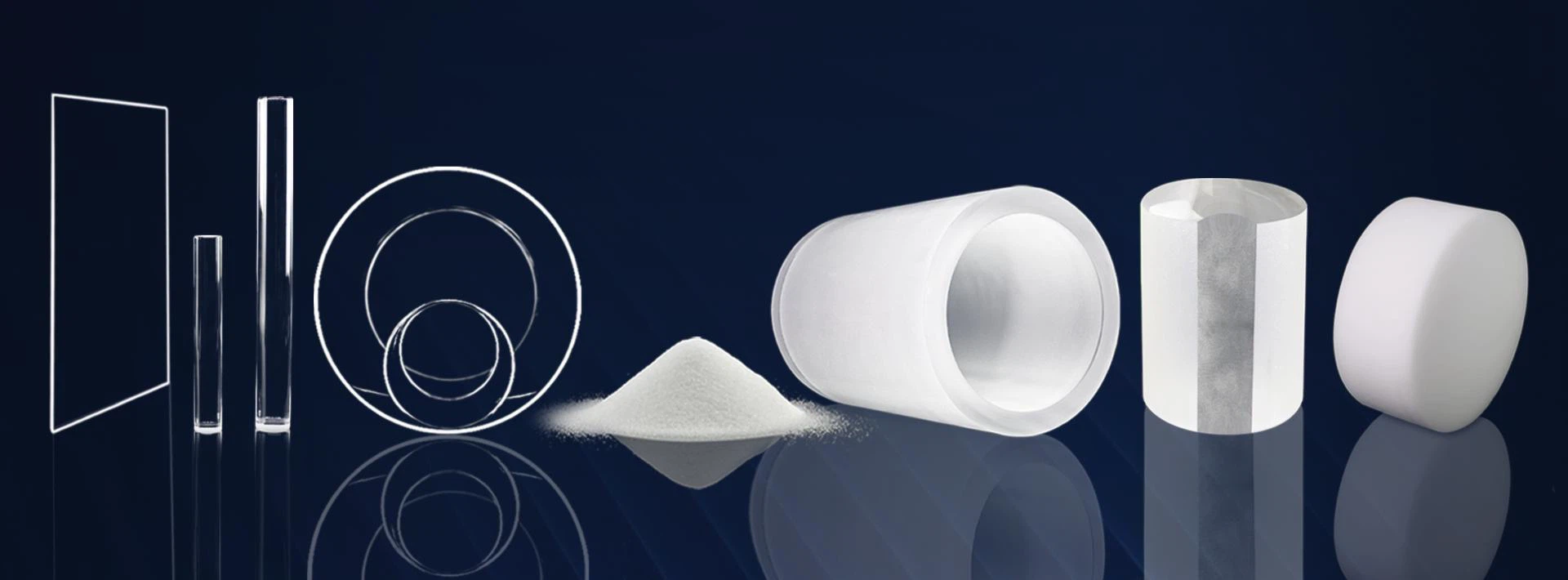
![Quartz Tube for UV Curing Lamp]() Quartz Tube for UV Curing LampIt is suitable for various power curing lamps that use ultraviolet light to irradiate special coatings, paints, inks, glues, 3D printing materials and other substances to cause chemical reactions to rapidly cure.view more
Quartz Tube for UV Curing LampIt is suitable for various power curing lamps that use ultraviolet light to irradiate special coatings, paints, inks, glues, 3D printing materials and other substances to cause chemical reactions to rapidly cure.view more -
![Transparent Quartz Rod]() Transparent Quartz RodQuartz Welding Rod、Automotive light bridge rod,Quartz device materials, etc.view more
Transparent Quartz RodQuartz Welding Rod、Automotive light bridge rod,Quartz device materials, etc.view more -
![Low Viscosity Quartz Rod]() Low Viscosity Quartz RodIt is mainly used in bridge rods for automobile and motorcycle headlights and other low-power lamps.view more
Low Viscosity Quartz RodIt is mainly used in bridge rods for automobile and motorcycle headlights and other low-power lamps.view more -
![Standard UV Block Quartz Tube]() Standard UV Block Quartz TubeIt is used for most of the ultraviolet filtering lamps such as ultraviolet tungsten halogen lamp, ultraviolet mercury lamp, metal halide lamp and ultraviolet sleeve tube.view more
Standard UV Block Quartz TubeIt is used for most of the ultraviolet filtering lamps such as ultraviolet tungsten halogen lamp, ultraviolet mercury lamp, metal halide lamp and ultraviolet sleeve tube.view more -
![Low Viscosity UV Block Quartz Tube]() Low Viscosity UV Block Quartz TubeMainly used in automotive, motorcycle headlamps and other low-power lamp bushings; It can also be applied to other sealing transition materials.view more
Low Viscosity UV Block Quartz TubeMainly used in automotive, motorcycle headlamps and other low-power lamp bushings; It can also be applied to other sealing transition materials.view more -
![High Deep Cut Off UV Block Quartz Tube]() High Deep Cut Off UV Block Quartz TubeOuter tube for automotive lamps and other UV-resistant quartz materials.view more
High Deep Cut Off UV Block Quartz TubeOuter tube for automotive lamps and other UV-resistant quartz materials.view more -
![Metal Halide Lamps Quartz Tube]() Metal Halide Lamps Quartz TubeHigh-quality metal halide lamps, discharge lamps, germicidal lamps, etc.view more
Metal Halide Lamps Quartz TubeHigh-quality metal halide lamps, discharge lamps, germicidal lamps, etc.view more -
![Standard Transparent Quartz Tube]() Standard Transparent Quartz TubeHalogen lamp, mercury lamp, stage lamp and other electric light sources and chemical pipelines, high-temperature quartz material vessels.view more
Standard Transparent Quartz TubeHalogen lamp, mercury lamp, stage lamp and other electric light sources and chemical pipelines, high-temperature quartz material vessels.view more -
![High Ozone Transparent Quartz Tube]() High Ozone Transparent Quartz TubeA kind of transparent quartz glass material with high purity, high temperature and corrosion resistance.view more
High Ozone Transparent Quartz TubeA kind of transparent quartz glass material with high purity, high temperature and corrosion resistance.view more -
![Standard Synthetic Quartz Tube]() Standard Synthetic Quartz TubeMainly applied for ozone production, oil destruction, disinfection and purification, ultra-pure water production (185 nm low pressure uv lamp, deep uv lamp).view more
Standard Synthetic Quartz TubeMainly applied for ozone production, oil destruction, disinfection and purification, ultra-pure water production (185 nm low pressure uv lamp, deep uv lamp).view more -
![Ruby Clear Quartz Tube]() Ruby Clear Quartz TubeA kind of transparent quartz glass, doping in the Pacific 181 type materials on the basis of adding several kinds of trace elements.view more
Ruby Clear Quartz TubeA kind of transparent quartz glass, doping in the Pacific 181 type materials on the basis of adding several kinds of trace elements.view more -
![Opaque Quartz Tube]() Opaque Quartz TubeFar infrared heating field, such as: heater, disinfection cabinet, microwave oven and other types of electric heating appliances.view more
Opaque Quartz TubeFar infrared heating field, such as: heater, disinfection cabinet, microwave oven and other types of electric heating appliances.view more


Quality Assurance
We believe in the sustainable development and obtain the certificates of ISO 9001, ISO14001 and OHSAS18001. Pacific Quartz, gathering the industry talents, is leading at R&D capability and cutting-edge technology innovation for new and high-end products.
Experience and expertise
Through the innovative development of more than 30 years, Pacific Quartz, as a national high-tech enterprise, has become the benchmark enterprise in China's quartz material industry.
Quality services
Our team is committed to delivering high-quality services to our clients. We use the latest technologies and tools to ensure that our services exceed your expectations.
Benefits of Transparent Quartz Rod
High temperature resistance: The softening point temperature of the transparent quartz rod is about 1730 ℃, which can be used for a long time at 1100 ℃, and the use temperature can reach 1450 ℃ in a short time.
Good edge performance: The resistance of transparent quartz rod is 10000 times that of ordinary pe pipe, which is an excellent electrical insulating material and has good insulation performance even at high temperature.
Good thermal stability: The thermal expansion coefficient of transparent quartz rod is very small, and it can withstand severe temperature changes. The transparent quartz rod will not crack when heated to about 1100 ℃ and put into normal temperature water.
Good light transmittance: Transparent quartz rod has good light transmittance in the whole spectrum band from ultraviolet to infrared, and the visible light transmittance is more than 93%, especially in the ultraviolet spectrum region, the z large transmittance can reach more than 80.
Strong corrosion resistance: Except hydrofluoric acid, transparent quartz rod hardly reacts with other acid substances. Its acid resistance is 30 times that of ceramic and 150 times that of stainless steel. Especially, its chemical stability at high temperature is incomparable with any other engineering material.
Forming And Finishing Technology Of Transparent Quartz Rod
The manufacture and shaping of transparent quartz rod is unlike processes that are used to manufacture typical glass. The higher temperatures are necessary due to the fact that transparent quartz rod does not flow but softens and becomes viscous.
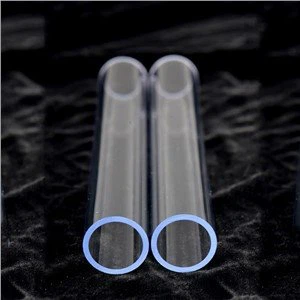


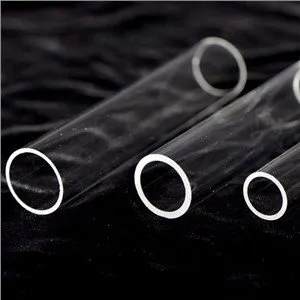
Mechanical Forming
Shaping and forming of transparent quartz rod may require diamond cutting tools due to its hardness. Also, such operating parameters must be optimized since the transparent quartz rod is also brittle and there is a limited force that can be applied before cracking or fracture occurs. Some of the mechanical processes include:
Cutting: Band and wire saws, chop saws, CO2 lasers, and water jet cutters are used to cut the transparent quartz rod. Using a laser cutter can leave a glazed and smooth cut. Saw cutting can leave a rough cut. Thick transparent quartz rod slabs may require multiple consecutive cuts if a single cut is not sufficient. Annealing may be required to relieve the thermally-induced stress. With vacuum annealing processes, the OH content can be reduced to fit the needs of certain applications. Lower OH levels allow for greater transmission of ultraviolet rays in the IR range of 2750 nm, which may be critical for certain applications.
Drilling: As detailed in the fused transparent quartz rod product, holes may be produced using a diamond driller. A laser driller may be used to cut thin, small plates. Proper cooling must be ensured in order to prevent the tools from premature wear-out.
Grinding: The transparent quartz rod surface may be smoothened and its thickness may be reduced, depending on the end-use application.
Hot Forming
The transparent quartz rod is quite complex to thermoform due to its high melting point and steep viscosity, allowing it to be formed on a very narrow temperature range. If the temperature is too low, the glass is solid; if the temperature is too high, the glass is less viscous and volatile resulting in evaporation of the parts. In addition to this, single or multiple annealing steps are required to relieve the thermal stress and prevent fracture induced by hot forming. The following are some hot forming methods which a manufacturer can use in order to enhance the glass product:
Welding: Two components of transparent quartz rod are joined together through a weld. The ends of each component are heated, and a piece of transparent quartz rod is melted to fill the gap in the seam or joint. It is critical to keep the temperature just high enough in order to avoid thermal stress.
Collapsing: A tube is locally heated to its softening temperature. Pressure is applied to the inside to reduce the tube's diameter.
Elongation and Compression: A positive or negative radial force is applied to elongate or compress the transparent quartz rod rod to its final diameter. This is performed at the softening temperature of the transparent quartz rod, and an optimal force must be applied in order to prevent fracture and cracking.
Glass Blowing: A piece of molten transparent quartz rod is inflated with the aid of a blowpipe in order to acquire a hollow shape.
Chemical and pharmaceutical processes. Chemical and pharmaceutical manufacturing operations experience a wide range of conditions, including exposure to high temperatures, corrosive chemicals, and water. Parts and components made from fused silica and quartz are ideal for use in these environments as they are chemically pure, chemical resistant, non-hygroscopic, and thermal shock resistant.
Electronics and electro-technology. Electronics and electronic technology rely on both conductive and insulating components. For the latter, fused silica and quartz are ideal as a construction material as they offer low conductivity, high penetration field strength, and low electric loss factor.
High-temperature operations. The thermal properties of both materials allow them to withstand high processing temperatures without risk of damage or degradation.
Light and laser technology. Many light-based systems (e.g., lasers) rely on glass optical components—such as ones made from fused silica and quartz—to focus or separate light to perform their operations.
Optical system components. Fused silica and quartz are used in the manufacture of many optical parts—such as lenses, mirrors, UV and IR transmitting optics, and metrology components—due to their ability to transmit light in the visible, ultraviolet, and infrared range.
Semiconductors. The purity of the two materials is particularly essential for components such as semiconductors, which play a role in many systems used in critical applications.
UV light sanitation. UV light sanitation serves as a non-toxic alternative to disinfection. As both fused silica and quartz demonstrate high thermal and radiation resistance, they are suitable for use in equipment subjected to such operations, such as semiconductor components and medical and laboratory instruments.

Transparent quartz rod features a high content of silicone dioxide (at least 99 percent). Glass crystal, however, has a maximum of up to 80 percent of the substance. Moreover, glass products consist have lead levels of 32% to enhance the refractive index and improve quality.
When cut, glass crystal presents a random molecular form, whereas transparent quartz rod displays a symmetrical structure. Due to the irregular structure of glass, it is considered an amorphous solid. Transparent quartz rod, along with other semi-precious crystals such as sapphire, ruby, and diamonds, attains a symmetrical form or an irregular one due to weathering or excessive pressure.
Both glass and transparent quartz rod are found in the crust of the earth. However, transparent quartz rod crystal by nature withstands heightened temperature and pressure levels. As a result, it is best suited for conditions where a protective covering is required. The crystal substitutes glass in harsh settings.
Reaction of the substances to electricity is another critical aspect. Glass works well as an insulator while transparent quartz rod is an ideal conductor of electricity. As a result, many industrial products incorporate transparent quartz rod due to its electric properties.
Properties of transparent quartz rod
Chemical purity
Contaminants, even in very low levels, influence the thermal, electrical and optical properties of the resulting transparent quartz rod and material in contact in their final application. Strict handling precautions must be taken at the starting material source and all stages of production to ensure high purity. The most common impurities are metal oxides (al₂o₃, fe₂o₃, mgo, etc.), water, and chlorine.
Water is present in transparent quartz rod as hydroxyl (oh) groups. The oh content can change depending on the thermal treatment and amount of moisture to which the transparent quartz rod is exposed at an elevated temperature. Oh influences infrared transmission, viscosity and attenuation. High levels of oh reduces infrared transmission. Oh also lowers thermal stability; higher oh content means that the transparent quartz rod is not suitable for high temperature end applications. An annealing step may reduce the oh content of the transparent quartz rod in electric fused transparent quartz rod.
Chemical behavior
Transparent quartz rod is chemically inert to most chemical compounds: Water, salt and acids, making it an advantageous material in chemical laboratories and industries. It is essentially impermeable to gases. Hydrofluoric acid and phosphoric acid are the only agents that can etch and disintegrate transparent quartz rod at ambient temperatures. However, alkali and alkali earth agents attack the surface, causing accelerated devitrification. 0.1 mg of alkali per square centimeter of alkali compounds can amplify to transform all of the semi-stable molecules. Even fingerprints, which contains traces of alkali, can trigger devitrification.
Thermal properties
Transparent quartz rod is known for its very low coefficient of thermal expansion (cte). Thermal expansion refers to the fractional change in size of an object in response to the change of its temperature. For most materials, cte is directly proportional to temperature change. Transparent quartz rod also has excellent thermal shock resistance, which can withstand sudden and extreme changes in temperature. Transparent quartz rod also has low thermal conductivity.
Transparent quartz rod is softened starting at 1630°c and acts like a viscous liquid at high temperatures like most glass types. This state occurs at a wide range of temperature, and viscosity decreases with increasing temperature. Viscosity is also increased by the presence of impurities.
Mechanical properties
Transparent quartz rod has almost similar mechanical properties compared to other glass types. Transparent quartz rod has high compressive strength, but also exhibits high brittleness. Surface defects can also affect the overall strength of this material. Machine-polished parts tend to be weaker than fire-polished ones. Also, the age of the glass also affects reliability due to exposure to the environment.
Optical properties
Transparent quartz rod has been a subject of research due to its extensive optical transmission properties, covering the ultra-violet regions, visible and infrared wavelengths. It can be further enhanced through addition of doping materials. Transmission is influenced by the transparent quartz rod‘ purity and oh content. The increase in metallic impurities and oh-molecular vibrational and rotational excitations can lead to light absorption and hence affect the consequent transmission.
Electrical properties
Transparent quartz rod is an excellent electrical insulator, retaining high resistivity at elevated temperatures. It has a high dielectric strength. This is due to the absence of charged mobile ions in the molecular lattice and the strong silicon-oxygen bond which imparts very low polarizability to the structure.
Our Factory
Jiangsu Pacific Quartz Co., Ltd. (short as Pacific Quartz hereinafter), founded in 1992, is a company well integrated with R&D, manufacturing and sales of high-end quartz materials. In 2014, Pacific Quartz was listed on the A shares main board of Shanghai Stock Exchange (Stock Ticker: SYGF, SH603688).
Through the innovative development of more than 30 years, Pacific Quartz, as a national high-tech enterprise, has become the benchmark enterprise in China's quartz material industry.


Asked Questions
As one of the most professional quartz for lighting application manufacturers and suppliers in China since 1992, we're featured by quality products and good service. Please rest assured to wholesale customized quartz for lighting application at competitive price from our factory.
Low Viscosity Quartz Rod, Spiral Quartz Tube, low OH quartz tube


