

-
![Electric Fused Quartz Ingot]() Electric Fused Quartz IngotMade by electric fused method, low OH, high purity, high temperature resistance.view more
Electric Fused Quartz IngotMade by electric fused method, low OH, high purity, high temperature resistance.view more -
![Silica and Alumina Particles]() Silica and Alumina ParticlesThe high purity quartz sand is specially doped and treated with trace impurities, and the new type of silica quartz material produced by strict melting process is characterized by low melting point.view more
Silica and Alumina ParticlesThe high purity quartz sand is specially doped and treated with trace impurities, and the new type of silica quartz material produced by strict melting process is characterized by low melting point.view more -
![Synthetic Quartz Ingot]() Synthetic Quartz IngotQuartz materials for semiconductor and optical industries ( LCD optical mask substrate, lens and mirror, aerospace window, large aperture reflection grating).view more
Synthetic Quartz IngotQuartz materials for semiconductor and optical industries ( LCD optical mask substrate, lens and mirror, aerospace window, large aperture reflection grating).view more -
![Flame Transparent Quartz Ingot]() Flame Transparent Quartz IngotMainly used in optical evaporation, coating materials, semiconductor materials, solar materials, LED, flat panel display, etc.view more
Flame Transparent Quartz IngotMainly used in optical evaporation, coating materials, semiconductor materials, solar materials, LED, flat panel display, etc.view more -
![Quartz Crystal Plate]() Quartz Crystal PlateSolar photovoltaic, chemical, thermal (e.g. etching groove, window, support plate, reaction chamber base, cover plate).view more
Quartz Crystal PlateSolar photovoltaic, chemical, thermal (e.g. etching groove, window, support plate, reaction chamber base, cover plate).view more -
![Fused Quartz Granule]() Fused Quartz GranuleQuartz sand is a colorless and transparent variety of quartz. Greeks call it "krystallos", which means "white ice".view more
Fused Quartz GranuleQuartz sand is a colorless and transparent variety of quartz. Greeks call it "krystallos", which means "white ice".view more -
![Quartz Glass Window]() Quartz Glass WindowQuartz glass window is made from PQ871 series quartz ingot. The quartz ingot can be made following products: Evaporation sputtering target, coating materials ring, semiconductor flange, solar materials, LED cover.view more
Quartz Glass WindowQuartz glass window is made from PQ871 series quartz ingot. The quartz ingot can be made following products: Evaporation sputtering target, coating materials ring, semiconductor flange, solar materials, LED cover.view more -
![Coating Quartz Ring]() Coating Quartz RingQuartz Glass Ring is made from PQ871 series quartz ingot. The quartz ingot can be made following products: Evaporation sputtering target, coating materials ring, semiconductor flange, solar materials, LED cover.view more
Coating Quartz RingQuartz Glass Ring is made from PQ871 series quartz ingot. The quartz ingot can be made following products: Evaporation sputtering target, coating materials ring, semiconductor flange, solar materials, LED cover.view more -
![UV-LED Quartz Disc]() UV-LED Quartz DiscUV-LED COVER, UV LED protect disc, quartz cover. The formation of quartz flakes is due to the high viscosity of the melt at high temperature.view more
UV-LED Quartz DiscUV-LED COVER, UV LED protect disc, quartz cover. The formation of quartz flakes is due to the high viscosity of the melt at high temperature.view more -
![UV Quartz Plate]() UV Quartz PlateUV Quartz plate is made from PQ870 series quartz ingot. The quartz ingot can be made following products: Photo mask, UV printer.view more
UV Quartz PlateUV Quartz plate is made from PQ870 series quartz ingot. The quartz ingot can be made following products: Photo mask, UV printer.view more


Quality Assurance
We believe in the sustainable development and obtain the certificates of ISO 9001, ISO14001 and OHSAS18001. Pacific Quartz, gathering the industry talents, is leading at R&D capability and cutting-edge technology innovation for new and high-end products.
Experience and expertise
Through the innovative development of more than 30 years, Pacific Quartz, as a national high-tech enterprise, has become the benchmark enterprise in China's quartz material industry.
Quality services
Our team is committed to delivering high-quality services to our clients. We use the latest technologies and tools to ensure that our services exceed your expectations.
Benefits of Fused Quartz Granule
Range of transmission: Through various manufacturing processes, producers of fused quartz granule have enabled it to achieve amazingly high throughput over a wide range of the spectrum. A standard grade ultraviolet fused quartz granule will transmit >90% from 200nm to 2 microns with only slight deviation at the 1.4 micron wavelength. Switch to an ir grade fused quartz granule, which removes the oh absorption bands, and you’ll achieve >90% from 250nm to 3.5 microns. Still other fused quartz granule varieties have low metallic impurities which allow for transmission in the high-power semiconductor, extreme uv regions of 248nm and 193nm. As most optical glasses “turn on” at 350nm and begin to “tail-off” near the 2 micron range, fused quartz granule is simply a superior, more versatile optical material.
Low coefficient of thermal expansion: A hallmark of fused quartz granule is its thermal stability. Whereas other optical materials will lose their surface accuracy when subjected to large changes in temperature, fused quartz granule is known for its ability to resist thermal shock and expansion. This important property makes it a perfect choice for mirror substrates when considering the application of either a metal or dielectric coating. The low cte also helps maintain the precision of an optics transmitted wavefront distortion over a range of temperatures.
Minimal/no fluorescence: In the design of every optical system, the signal-to-noise ratio is an important factor. When exposed to high intensity radiation such as uv light, many materials will absorb the energy and re-emit it, thereby fluorescing. This effect introduces unwanted noise into the system which degrades the overall signal and reduces the effectiveness of the instrument. Fused quartz granule provides extremely low, and in many cases, no fluorescence in the presence of such radiation. This specific characteristic has earned fused quartz granule the reputation as the material of choice for laser applications.
High chemical resistance: Fused quartz granule is chemically inert and will not react with a wide array compounds, including most acids in very high concentrations, with the exception of hydrofluoric acid. Such durability is useful when fused quartz granule is employed as a window in harsh environments or when used as a laboratory tool in contact with caustic chemicals. This resistance also protects the integrity of an optic’s surface polish assisting both the flatness and transmitted wavefront distortion.
Applications Of Fused Quartz Granule

Chemical and pharmaceutical processes. Chemical and pharmaceutical manufacturing operations experience a wide range of conditions, including exposure to high temperatures, corrosive chemicals, and water. Parts and components made from fused quartz granule and quartz are ideal for use in these environments as they are chemically pure, chemical resistant, non-hygroscopic, and thermal shock resistant.
Electronics and electro-technology. Electronics and electronic technology rely on both conductive and insulating components. For the latter, fused quartz granule and quartz are ideal as a construction material as they offer low conductivity, high penetration field strength, and low electric loss factor.
High-temperature operations. The thermal properties of both materials allow them to withstand high processing temperatures without risk of damage or degradation.
Light and laser technology. Many light-based systems (e.G., lasers) rely on glass optical components—such as ones made from fused quartz granule and quartz—to focus or separate light to perform their operations.
Optical system components. Fused quartz granule and quartz are used in the manufacture of many optical parts—such as lenses, mirrors, uv and ir transmitting optics, and metrology components—due to their ability to transmit light in the visible, ultraviolet, and infrared range.
Semiconductors. The purity of the two materials is particularly essential for components such as semiconductors, which play a role in many systems used in critical applications.
Uv light sanitation. Uv light sanitation serves as a non-toxic alternative to disinfection. As both fused quartz granule and quartz demonstrate high thermal and radiation resistance, they are suitable for use in equipment subjected to such operations, such as semiconductor components and medical and laboratory instruments.

Fused quartz granule is made of very high purity crystal silica (quartz sand), melted by fusion in electrical arc ovens at temperatures of 1800-2000 ℃ and then cooled sufficiently fast to avoid crystallization and obtain transparent amorphous silica (silicon dioxide). Fused quartz granule emerges from this process in large non-crystalline silica glass blocks, in which the impurities have been almost totally eliminated. The process of separation of the parts of the block are done mainly manually by skilled workers to prepare for the transformation of this fused quartz granule glass into usable grades for different applications.
Transforming high-grade quartz glass into high-performance fused quartz granule grains and powders
Transformation is done by grinding the quartz glass to obtain specially engineered grains or powders, classified in different grades: Grade a, grade b, and grade c.
This line of fused quartz granule, referred to as the fs-99 series at elkem silicon products, is mainly used in refractory, ceramic & glass manufacturing, investment casting and in other special applications.
Electric Fused Quartz Ingot
Electric fused quartz ingot, fused silica or quartz glass is a glass consisting of almost pure silica (silicon dioxide, SiO2) in amorphous (non-crystalline) form. This differs from all other commercial glasses, such as soda-lime glass, lead glass, or borosilicate glass, in which other ingredients are added which change the glasses' optical and physical properties, such as lowering the melt temperature, the spectral transmission range, or the mechanical strength.


●Favorable transmission properties in the ultraviolet range
●Endurance to high temperatures in the visible and infrared spectrum
●Low coefficient of thermal expansion and robust thermal shock resistance
●Outstanding electrical insulation and elevated chemical purity
●Capability for prolonged operation at 1100°C or short-term operation at 1300°C
Structure:
Electric fused quartz ingot is an amorphous, non-crystalline form of silicon dioxide, whereas quartz is a crystalline form of silicon dioxide.
Manufacturing:
Electric fused quartz ingot is produced by melting and cooling pure silicon dioxide, typically in an oxygen-free environment. Quartz is a naturally occurring mineral that is mined from the earth.
Properties:
- Electric fused quartz ingot has a higher degree of purity and is more homogeneous compared to quartz.
- Electric fused quartz ingot has better optical properties, with higher transparency and lower refractive index variation.
- Electric fused quartz ingot has a higher thermal stability and resistance to thermal shock compared to quartz.
- Quartz has a more defined, crystalline structure, which can make it more susceptible to certain types of impurities and defects.
Applications:
- Electric fused quartz ingot is commonly used in optical applications, such as lenses, windows, and fiber optics, due to its superior optical properties.
- Quartz is widely used in electronic devices, such as oscillators and piezoelectric sensors, taking advantage of its piezoelectric properties.
- Both materials are used in various scientific and industrial applications, but the specific choice depends on the required properties and performance characteristics.
UV Quartz Plate
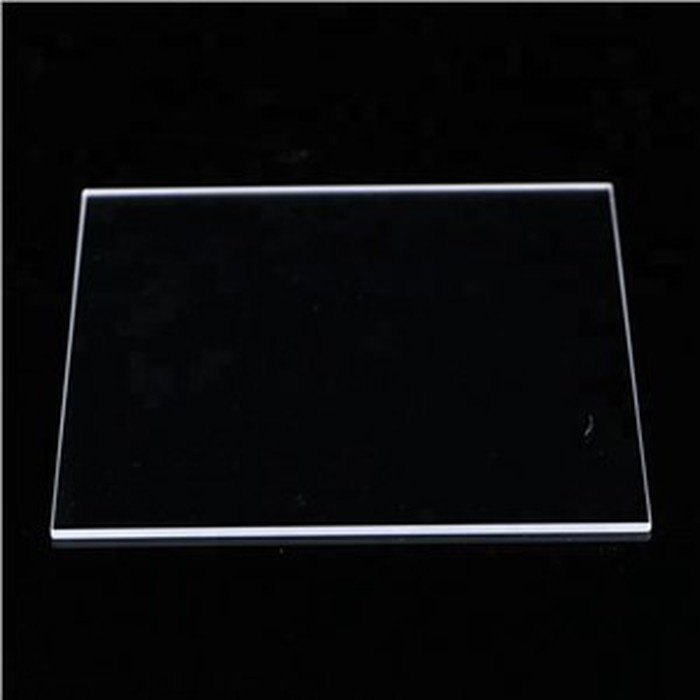
The quartz glass plate protects lamps from debris and works as a filter between the lamp and the curing system. The plate prevents grit, dirt and contaminants from building up.
Benefits of UV Quartz Plate
Very Low Coefficient of Thermal Expansion:UV quartz plate exhibit an extremely low coefficient of thermal expansion (CTE), typically around 0.55 x 10^-6 /°C. This property ensures minimal dimensional changes with temperature variations, enabling them to withstand rapid temperature fluctuations without cracking or warping.
High-Temperature Resistance:Quartz plates possess exceptional thermal resistance, withstanding temperatures up to 1500°C. This attribute makes them ideal for applications involving high-temperature processes, such as semiconductor fabrication, glassblowing, and chemical reactions.
Optical Clarity:UV quartz plate are characterized by their high optical clarity, allowing for exceptional light transmission. They exhibit minimal absorption and scattering of light, making them suitable for various optical applications, including lenses, prisms, and windows.
High Chemical Purity:UV quartz plate are composed of ultra-pure silica (SiO2), resulting in high chemical purity. They are resistant to most acids, bases, and organic solvents, making them ideal for applications in harsh chemical environments.
Excellent Electrical Insulation Qualities:UV quartz plate are excellent electrical insulators, possessing high resistivity and low dielectric loss. This property makes them suitable for electrical applications, such as insulators, capacitors, and high-voltage components.
More efficiency: Reflectors can fine-tune the ultraviolet light so it consistently covers a target area and increases the intensity to the proper level without increasing power demand. Because reflectors allow for adjustments, they more efficiently use energy without wasting it on off-target surfaces or requiring more energy for a stronger beam of light.
Better and more uniform coverage: High-quality coatings and print projects require consistency at every stage of production, including the curing period. Manufacturers can guarantee a more consistent output with reflectors, which concentrate and position the UV light properly. Protective UV quartz plate also affect uniformity, as they prevent debris and ink from interfering with the lamp's internal workings or obscuring the light beam.
Longer-lasting materials: UV quartz plate primarily protect the internal components of UV lamps from contamination that can gum up the parts, cause additional wear, or otherwise interfere with operations. This increases the lifespan of each lamp. It also increases the cost-effectiveness of the UV light curing processes, as manufacturers don't have to replace their lamps as often.
Applications of UV quartz plate
Semiconductor Manufacturing
In the semiconductor industry UV quartz plate are employed in many processes, such as the handling of wafers and photolithography and diffusion. Their quality and thermal stabilities makes them perfect for these precise applications.
Laboratory Equipment
UV quartz plate are an essential component in lab equipment, like microscopes, spectrophotometers and furnaces. Their optical clarity and chemical resistance guarantee reliable and accurate results from scientific experiments.
Optics and Photonics
UV quartz plate of high purity are used in optics and photonics to create lenses, mirrors, as well as windows. Their capability of transmitting UV and infrared light with no distortion makes them a valuable resource in these areas.
Home Decor
They are also widely used for interior decor, particularly for kitchen countertops and backsplashes. Their stain resistance, durability and attractive appeal make them an ideal option for homeowners.
Do You Know The Precautions For The Use Of UV quartz plate?
The use of UV quartz plate should follow certain precautions since quartz glass are relatively expensive materials, attention should be paid to:
All kinds of UV quartz plate have a maximum operating temperature, which should not be exceeded during use, otherwise it will crystallize or soften and deform.
Quartz glass is an acidic material. Strictly avoid contact with alkaline substances (such as water glass, asbestos, potassium-sodium compounds, etc.) when used at high temperature, otherwise its anti-crystallization performance will be greatly reduced.
UV quartz plate are allowed to be used continuously at high temperature, which is good for prolonging the life of quartz glass and improving the temperature resistance. On the contrary, the intermittent use of UV quartz plate at high temperature has a limited number of uses.
Although the quartz glass material has extremely high thermal stability, it can withstand severe temperature changes. However, in actual use, due to the difference in residual strain and product shape, the thermal stability has a certain difference, and attention should be paid when using it.
Quartz glass that needs to be used at high temperature must be wiped clean before use. It can be soaked with 10% hydrofluoric acid or lotion, then cleaned with high-purity water or treated with alcohol. Thin-line gloves should be worn during operation, and it is not allowed to directly touch the quartz glass with hands.
Any solution containing substances that corrode glass should not be stored in quartz glass instruments for a long time. And glassware cannot be heated on a flame or electric stove or baked in a drying oven.
Our Factory
Jiangsu Pacific Quartz Co., Ltd. (short as Pacific Quartz hereinafter), founded in 1992, is a company well integrated with R&D, manufacturing and sales of high-end quartz materials. In 2014, Pacific Quartz was listed on the A shares main board of Shanghai Stock Exchange (Stock Ticker: SYGF, SH603688).
Through the innovative development of more than 30 years, Pacific Quartz, as a national high-tech enterprise, has become the benchmark enterprise in China's quartz material industry.


Asked Questions
As one of the most professional quartz for optical application manufacturers and suppliers in China since 1992, we're featured by quality products and good service. Please rest assured to wholesale customized quartz for optical application at competitive price from our factory.
clear quartz plate, UV Quartz Plate, Optical coating quartz rod


