

-
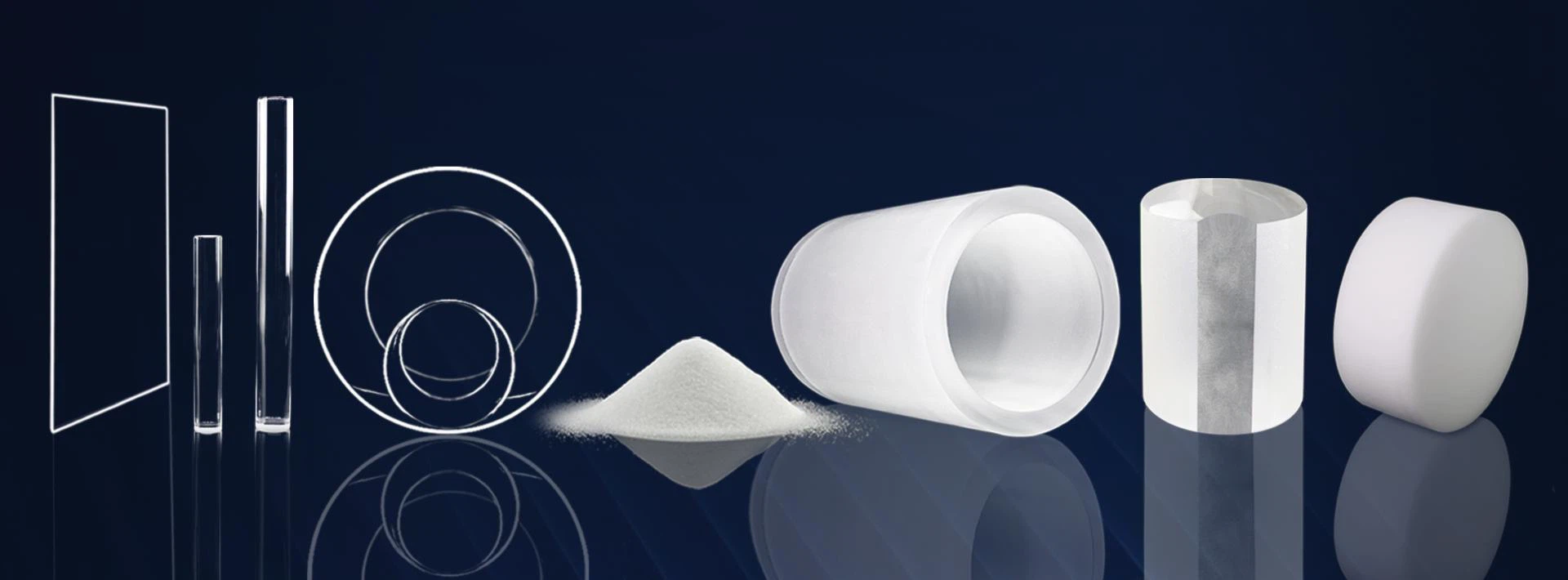
![Quartz Heat-Treated Tube]() Quartz Heat-Treated TubeUsed in Silicon deposition and diffusion process, other chemical reaction vesselsview more
Quartz Heat-Treated TubeUsed in Silicon deposition and diffusion process, other chemical reaction vesselsview more -
![Quartz Furnace Door]() Quartz Furnace DoorApplied in silicon wafer diffusion and other heat treatment equipment, to maintain the internal thermal field temperature uniformity and stability, to ensure the quality of silicon wafer processing.view more
Quartz Furnace DoorApplied in silicon wafer diffusion and other heat treatment equipment, to maintain the internal thermal field temperature uniformity and stability, to ensure the quality of silicon wafer processing.view more -
![Quartz Feeder Tube]()
-
![Quartz Cone]() Quartz ConeQuartz device used to control the uniform feeding of silicon in the process of drawing monocrystalline silicon, also can be used in semiconductor process.view more
Quartz ConeQuartz device used to control the uniform feeding of silicon in the process of drawing monocrystalline silicon, also can be used in semiconductor process.view more -
![Quartz Boat&Support]() Quartz Boat&SupportApplied in silicon wafer surface deposition, diffusion, annealing and other processes, as a carrying device, boat bracket used as several quartz boat carrying device.view more
Quartz Boat&SupportApplied in silicon wafer surface deposition, diffusion, annealing and other processes, as a carrying device, boat bracket used as several quartz boat carrying device.view more -
![Quartz Ceramic Round Crucible]() Quartz Ceramic Round CrucibleQuartz ceramic crucible features fine structure, low thermal expansion, tight geometric tolerance, high resistance to thermal shock, excellent electrical properties and high chemical purity and resistance.view more
Quartz Ceramic Round CrucibleQuartz ceramic crucible features fine structure, low thermal expansion, tight geometric tolerance, high resistance to thermal shock, excellent electrical properties and high chemical purity and resistance.view more -
![Solar Grade High Purity Quartz Sand]() Solar Grade High Purity Quartz SandSolar grade high purity quartz sand is widely used in manufacture all kinds of quartz crucible.view more
Solar Grade High Purity Quartz SandSolar grade high purity quartz sand is widely used in manufacture all kinds of quartz crucible.view more -
![Solar Grade Opaque Quartz Ingot]() Solar Grade Opaque Quartz IngotSolar grade opaque quartz ingot is used as the base material of quartz heat insulator in solar cell manufacturing process.view more
Solar Grade Opaque Quartz IngotSolar grade opaque quartz ingot is used as the base material of quartz heat insulator in solar cell manufacturing process.view more -
![Solar Grade Quartz Rod]() Solar Grade Quartz RodSolar Grade Quartz Rod is applied as the base material for quartz boat in solar cell manufacturing Process.view more
Solar Grade Quartz RodSolar Grade Quartz Rod is applied as the base material for quartz boat in solar cell manufacturing Process.view more -
![Solar Grade Quartz Tube]() Solar Grade Quartz TubeSolar grade quartz tube is used as the base material for quartz components of diffusion and PE process in solar cell manufacturing.view more
Solar Grade Quartz TubeSolar grade quartz tube is used as the base material for quartz components of diffusion and PE process in solar cell manufacturing.view more -
![High Quality Quartz Wool]() High Quality Quartz WoolHigh temperature insulation for semiconductor and photovoltaic industry(heat baffle for example).view more
High Quality Quartz WoolHigh temperature insulation for semiconductor and photovoltaic industry(heat baffle for example).view more -
![Process Quartz Tube for Solar]() Process Quartz Tube for SolarSolar grade process quartz tube is widely used in the oxidation and diffusion process in solar wafer manufacturing.view more
Process Quartz Tube for SolarSolar grade process quartz tube is widely used in the oxidation and diffusion process in solar wafer manufacturing.view more


Quality Assurance
We believe in the sustainable development and obtain the certificates of ISO 9001, ISO14001 and OHSAS18001. Pacific Quartz, gathering the industry talents, is leading at R&D capability and cutting-edge technology innovation for new and high-end products.
Experience and expertise
Through the innovative development of more than 30 years, Pacific Quartz, as a national high-tech enterprise, has become the benchmark enterprise in China's quartz material industry.
Quality services
Our team is committed to delivering high-quality services to our clients. We use the latest technologies and tools to ensure that our services exceed your expectations.

● Good transmission behavior in the ultraviolet range
● High-temperature endurance in the visible and infrared range
● Low coefficient of thermal expansion and high thermal shock resistance
● Exceptional electrical insulation and high chemical purity
● Suitability for permanent operation at 1100° C or short-term operation at 1300° C
Solar Grade Quartz Rod Processing Methods
Cutting and grinding: Solar grade quartz rod can be cut and ground into various shapes and sizes using diamond cutting tools and grinding wheels. This process involves scoring the glass and applying pressure to break it along the scored lines or using cnc machines for precision cutting and shaping.
Polishing: After cutting and grinding, the solar grade quartz rod surfaces are polished to achieve the desired surface finish and optical clarity. Polishing can be done using techniques such as mechanical polishing with abrasives or chemical polishing using acids or other chemical compounds.
Drilling and milling: Custom holes, slots, and other features can be created in solar grade quartz rod using diamond drill bits and milling tools. This process requires precise control and specialized equipment to avoid cracking or chipping the glass.
Heat treatment: Solar grade quartz rod can be annealed or tempered to relieve internal stresses, improve its mechanical strength, or change its optical properties. This process involves heating the glass to a specific temperature and then cooling it slowly or rapidly, depending on the desired outcome.
Fusing and bonding: Multiple pieces of solar grade quartz rod can be joined together using techniques such as thermal fusion, which involves heating the glass pieces until they soften and fuse together, or adhesive bonding using specialized glass adhesives.
Doping and coating: Solar grade quartz rod can be doped with various elements or coated with thin films to modify its optical, electrical, or mechanical properties. This process involves introducing dopants during the melting process or depositing coatings on the glass surface using methods such as chemical vapor deposition (cvd) or sputtering.
Forming and molding: Solar grade quartz rod can be shaped into complex forms using techniques such as hot forming, where the glass is heated until it becomes soft and pliable, and then molded into the desired shape using molds or other forming tools.
Blowing and drawing: Solar grade quartz rod can be drawn into fibers or blown into hollow shapes using specialized equipment and techniques. This process involves heating the glass and pulling or blowing it into the desired form.
Application Of Solar Grade Quartz Rod
Applications at high temperatures
The exceptional purity of our solar grade quartz rod ensures that the transmitted light remains undistorted. As a result, they contribute to the accuracy and reliability of optical sensors.
In industries where precise measurements are required, such as medical diagnostics, environmental monitoring and industrial sensing, the clarity of solar grade quartz rod improves the overall performance of optical sensors and measuring devices.
Fiber optics and light control technology
The exceptional clarity of a quartz glass rod is critical to minimizing signal loss in fiber optic cables. In telecommunications, data centers and internet infrastructure, the use of solar grade quartz rod ensures that the transmitted signals retain their integrity, resulting in faster and more reliable communication.
Precision instruments and scientific research
Industries that rely on precision instruments, such as laboratories, research facilities and manufacturing plants, use solar grade quartz rod for various scientific applications.
These include chromatography and other analytical techniques. Their use in scientific research ensures accurate measurements and reliable results, contributing to advances in fields such as materials science, chemistry and physics.
Chemical analyses and spectroscopy
Solar grade quartz rod are used in laboratories and in industry, where resistance to chemical corrosion is crucial. They are used to examine and analyze chemical substances.
The chemical resistance of solar grade quartz rod ensures that they are not attacked by corrosive chemicals. This property is essential for maintaining the integrity of the analytical process and makes them an indispensable component for material characterization and quality control.
Solar Grade High Purity Quartz Sand
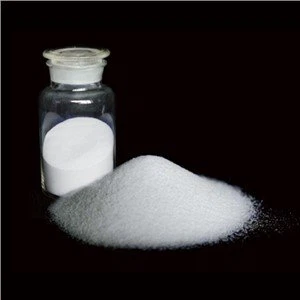
Solar grade high purity quartz sand and powder is a critical and essential mineral used in the manufacture of Solar PV crucibles for fabrication of solar grade silicon wafers and semiconductor crucibles for fab of semi grade silicon wafers.

Solar grade high purity quartz sand is regarded as a fantastic abrasive due to its hardness (it is harder than most natural minerals) and resistance to corrosion. Additionally, it is utilized as glass grinding media, scouring cleaners (powder), sanding and sawing grit, and Sand Blasting Machine.
Because a large portion of quartz is made of natural quartz material that is mined from the earth, quartz is inherently environmentally beneficial. It has a long replacement life than other countertops and is even recyclable.
It is non-porous, solar grade high purity quartz sand. Nearly 90% of quartz is used to make quartz countertops, which is advantageous to you in two ways. Easy to Maintain. Quartz countertops are not only non-porous but also minimal maintenance, very resilient, fashionable, and less prone to flaws.
Solar Grade High Purity Quartz Sand vs. Silica Sand: What's the Difference?
Solar Grade High Purity Quartz Sand
Solar grade high purity quartz sand stands as the natural, organic option in terms of sand options. It forms when quartz-rich rocks break apart over millions of years – think mountains crumbling into tiny pieces – producing solar grade high purity quartz sand as its result.
Quartz is famed for being durable and resistant to chemical weathering effects; making it one of the tougher members of its family of sand types.
Silica Sand
Silica sand may sound similar, but it has its own character. Though composed primarily of silicon dioxide, silica sand has long been recognized for industrial applications – its versatility compared to regular beach sand makes it perfect. Think of silica sand like Swiss Army knife of sands; ready and eager for use whenever needed!
Chemical Composition
Let's get a bit nerdy for a moment: Both quartz and silica sand contain silicon dioxide (SiO2). But the devil lies in the details:
Solar grade high purity quartz sand contains almost pure SiO2, the equivalent to being an A student without extracurricular commitments.
Silica sand contains more minerals than just SiO2, like having an all-around student who excels at everything.
These impurities can significantly impact the sand's properties and uses. A little iron here, a touch of feldspar there, and suddenly you've got a whole different ball game!
Particle Characteristics
Size matters in the sand world, and so does shape. Solar grade high purity quartz sand particles tend to be more angular and irregular, like pieces of a broken mirror.
Silica sand particles, on the other hand, are often more rounded, like tiny marbles. This difference in shape affects how the sand behaves in various applications, from concrete mixing to glass making.
Hardness and Durability
Quartz and silica sand are hardy materials. Both rank around 7 on Mohs' scale of mineral hardness – that means harder than steel nail! With such extreme hardiness comes superior wear resistance that's great for applications where wear resistance is vital – like having your very own industrial bodyguard!
Color Variations
Solar grade high purity quartz sand ranges in hue from transparent to milky white while silica sand may vary between white, tan and even pink hues depending on its mineral makeup – nature's own palette!
Extraction and Processing
Mining sand requires more than simply scooping it off of beaches – it involves complex processes including open-pit mining, dredging and underground mining.
Once extracted, extracted material often undergoes rigorous cleaning and sorting processes – it's like sending toughest grains through boot camp!
Industrial Applications: A Comparison
Both types of sand have their specialties. Solar grade high purity quartz sand is a star in the construction industry, while silica sand shines in glassmaking and metal casting. They're like specialized tools in a craftsman's toolkit – each has its perfect job.
Cost Factors
The price of sand can vary wildly depending on quality, purity, and location. It's like the real estate market – location, location, location! Generally, high-purity silica sand commands a premium due to its specialized applications.
Health and Safety Concerns
Working with sand can be hazardous to one's health if inhaled for extended periods, so workers in industries using such substances need to use appropriate protective gear as part of the job – think of it like sunscreen for your lungs; better safe than sorry!
Quality Control and Testing
Sand goes through more tests than a student during finals week. From sieve analysis to chemical composition tests, every grain is scrutinized to ensure it meets industry standards.
Global Market Trends
Quartz and silica sand is enjoying unprecedented demand due to increased construction and manufacturing sectors; seemingly running the global economy! It seems these tiny grains may even be doing this!
Future Outlook
With natural sand resources dwindling rapidly, sustainable alternatives and more efficient extraction methods have become ever more crucial to maintaining their supply. By learning new tricks for this ancient resource we're finding new ways to responsibly exploit it – like teaching an old dog new tricks!
High Quality Quartz Wool
The random asymmetric arrangement of fragile and flexible fibers of fused quartz is termed high quality quartz wool. It is also known as silica wool. It is a milky white color that looks like cotton wool. It is made up of highly pure SiO2 and high-quality quartz crystals. Like fused quartz products, it also has similar properties. The maximum operating temperature of this is 1150 ºC.

High Quality Quartz Wool Market by Types
High quality quartz wool is a crucial material used in various industries for its thermal and chemical properties. In the United States, the high quality quartz wool market is segmented primarily into several types based on their applications and compositions.
Firstly, high-purity high quality quartz wool dominates the market due to its excellent resistance to high temperatures and chemicals. It finds extensive use in laboratories and semiconductor manufacturing processes where purity and performance are critical.
Secondly, fused high quality quartz wool is another significant segment known for its high mechanical strength and durability. It is commonly used in industrial applications such as filtration, insulation, and catalyst support due to its robustness and thermal stability.
Thirdly, low-purity high quality quartz wool, though less common than high-purity variants, serves niche applications where cost-effectiveness outweighs the need for high thermal or chemical resistance. Industries such as construction and automotive sectors utilize this type for insulation and soundproofing purposes.
Lastly, specialty high quality quartz wool products cater to specific industrial requirements, such as ultra-thin fibers used in advanced electronics and aerospace applications. These specialized variants are engineered to meet stringent performance criteria demanded by cutting-edge technologies.
Our Factory
Jiangsu Pacific Quartz Co., Ltd. (short as Pacific Quartz hereinafter), founded in 1992, is a company well integrated with R&D, manufacturing and sales of high-end quartz materials. In 2014, Pacific Quartz was listed on the A shares main board of Shanghai Stock Exchange (Stock Ticker: SYGF, SH603688).
Through the innovative development of more than 30 years, Pacific Quartz, as a national high-tech enterprise, has become the benchmark enterprise in China's quartz material industry.


Asked Questions
As one of the most professional quartz for solar application manufacturers and suppliers in China since 1992, we're featured by quality products and good service. Please rest assured to wholesale customized quartz for solar application at competitive price from our factory.
Solar Grade Opaque Quartz Ingot, High Quality Quartz Wool, heat insulation quartz wool


